You Use Products Every Day. But Who Decides What Gets Built?
You notice when an app introduces a new feature, a payment flow changes, or checkout suddenly becomes easier. But who decides what gets built—and why?
I get this question quite often:
“What exactly does a Product Manager do?”
And I understand why.
Because unlike some professions, Product Management can feel invisible.
You open a messaging app and notice a new feature.
Your banking app changes the way you transfer money.
A checkout process that once took five steps suddenly takes three.
A streaming platform seems to understand what you might want to watch next.
You notice the changes.
But you probably don’t think about the work and decisions behind them.
- New feature
- Faster checkout
- New payment flow
- Better recommendations
- Research
- Questions
- Prioritization
- Trade-offs
- Collaboration
- Experimentation
- Measurement
That’s where Product Management starts becoming interesting.
A Product Manager helps a team answer questions like:
- 01What problem are we trying to solve?
- 02Who are we solving it for?
- 03Is this problem important enough to solve?
- 04What should we build first?
- 05How will we know if what we built actually worked?
Let’s take a simple example.
Imagine a messaging product.
The team notices that people are using one part of the product less frequently.
The immediate response might be:
Let’s build a new feature.
But should they?
Maybe the problem isn’t a lack of features.
- Maybe users don’t understand the existing feature.
- Maybe the experience is frustrating.
- Maybe users have found a workaround.
- Maybe the team’s assumption about the problem is completely wrong.
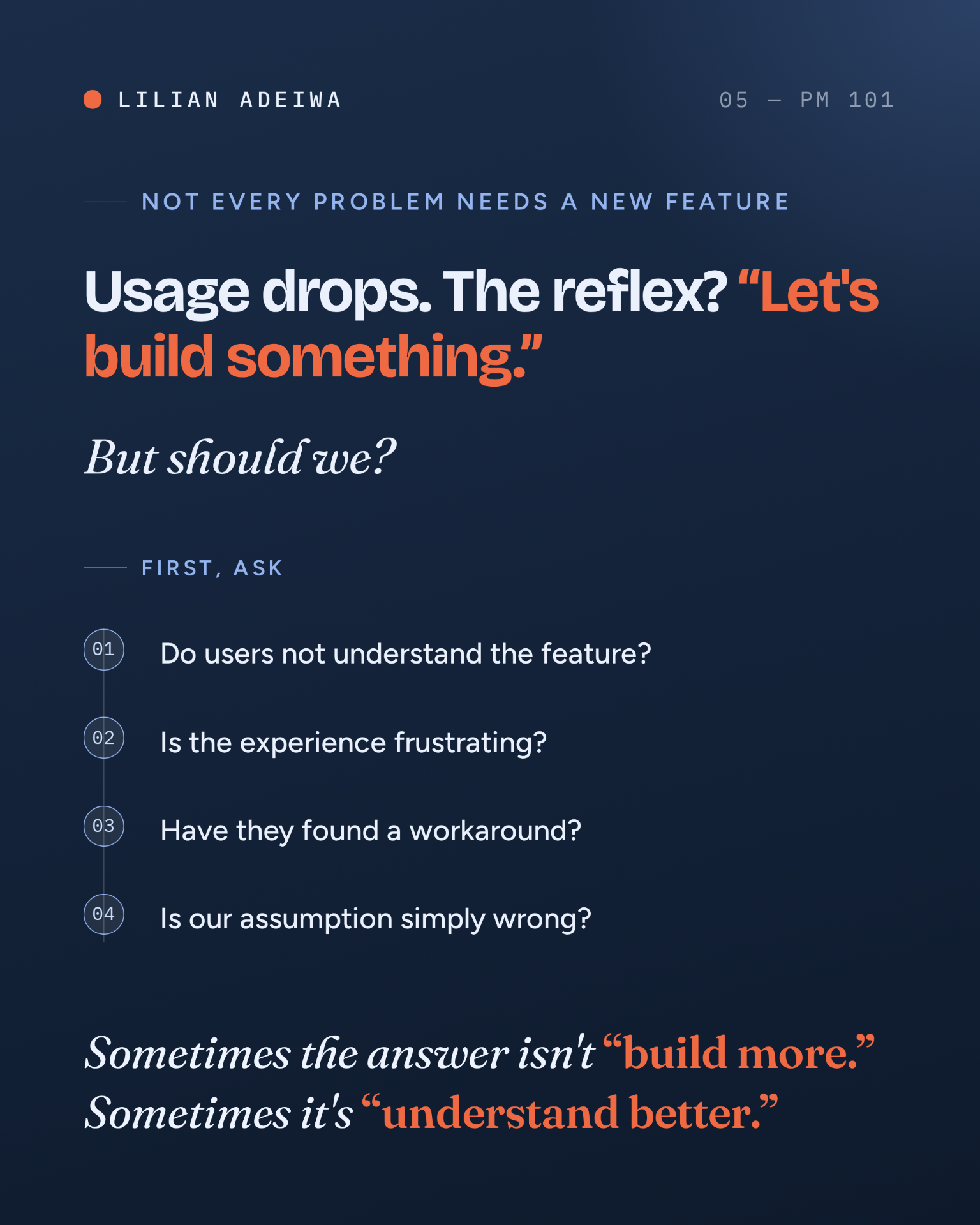
Sometimes the answer isn’t to build more. Sometimes it’s to understand better.
This is why building products is not simply about having an idea and asking engineers to code it.
Before deciding what to build, someone has to help the team understand the problem.
That may involve speaking with users, studying behaviour, looking at data, testing assumptions, understanding business goals, assessing technical constraints, and deciding what deserves priority.
The Product Manager doesn’t do all of this alone.
That’s another misconception I had to unlearn.
Product Managers work cross-functionally with people across design, engineering, research, data, marketing, sales, operations, and other teams depending on the company.
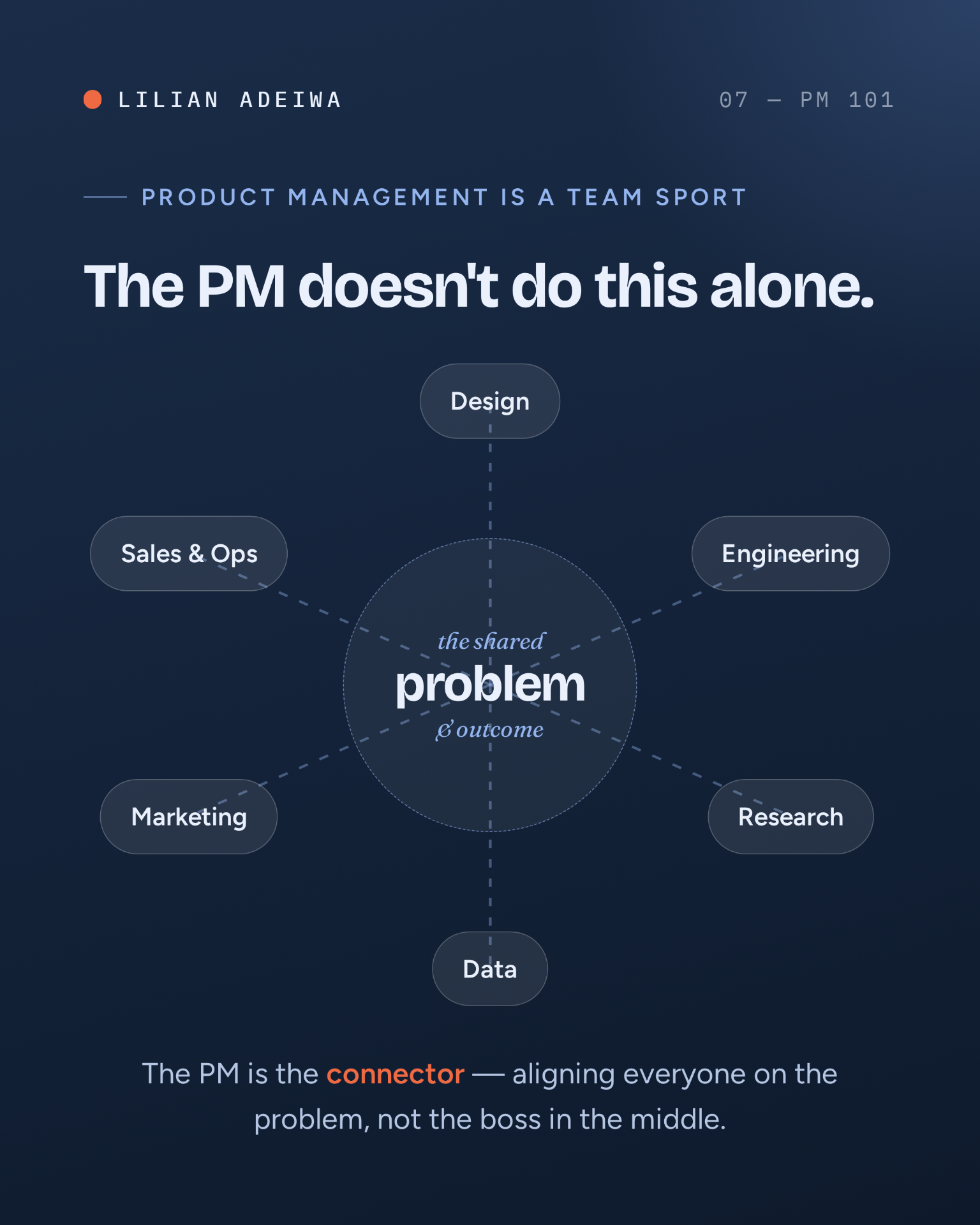
The PM helps create alignment and clarity around the shared work.
The PM helps create clarity around the problem, the user, the priorities, and the outcome the team is trying to achieve.
And the work doesn’t end when the product launches.
After launch come more questions:
- Are people using it?
- Where are they dropping off?
- Did it solve the original problem?
- What are users saying?
- Did the behaviour we hoped to change actually change?
- Should we improve it, expand it, rethink it, or remove it?
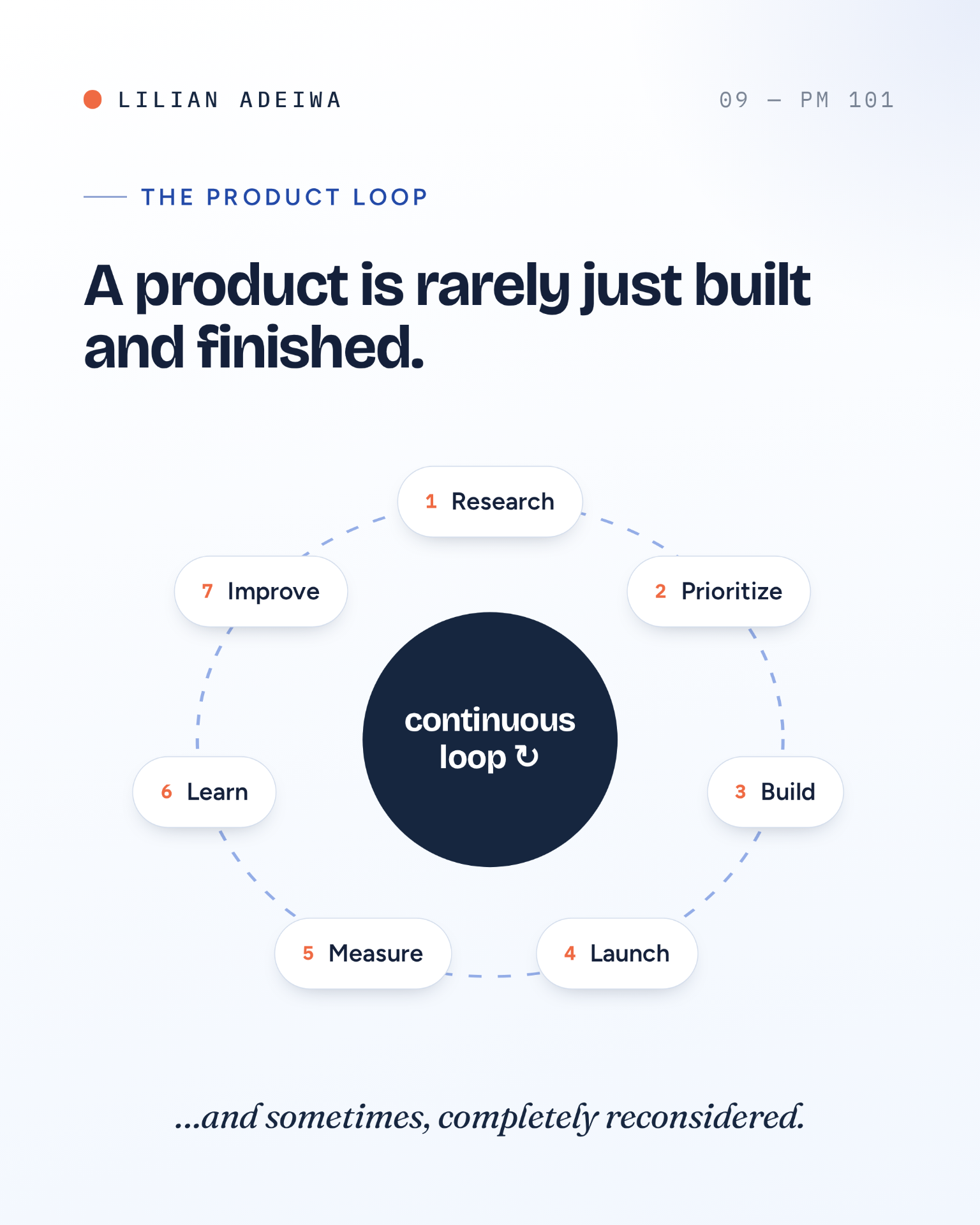
And then the cycle continues.
A product is rarely just built and finished.
That is one of the things I find fascinating about Product Management.
A product is rarely just built and finished.
It is researched. Prioritized. Built. Launched. Measured. Learned from. Improved. And sometimes, completely reconsidered.
So, the next time an app you use introduces a feature you love—or one that makes you wonder, “Who asked for this?” 😂—remember that somewhere behind that change, a team made a series of decisions about what problem to solve and what to build.
Product Management is part of the work that helps those decisions become intentional.
Next, I’ll answer another question I hear quite often:
What exactly is the difference between a Product Manager and a Project Manager?
Because, no, they are not the same job. 😅
What is one digital product you use every day that you couldn’t imagine life without?
Product Manager or Project Manager?
They sound similar. They are not the same job.
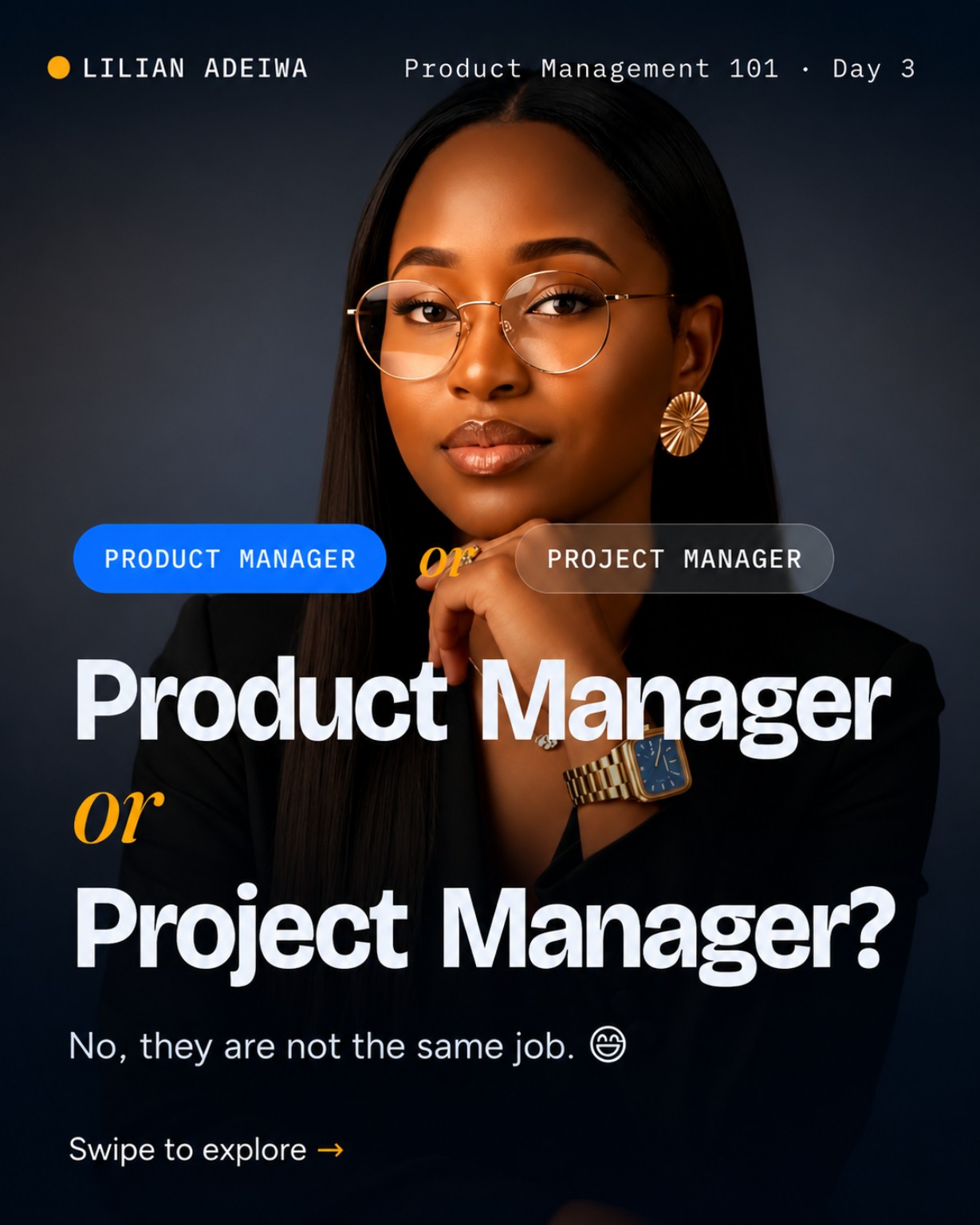
Product Manager or Project Manager?
They sound similar, and the roles can work closely together, but they are not the same job. Here is a practical way to understand the difference.

I Got Quiet Because I Wanted More.
I was doing a lot. But somewhere in the middle of all that activity, I had to ask myself a difficult question: What exactly do I want to become excellent at?